• By Quentin Langley


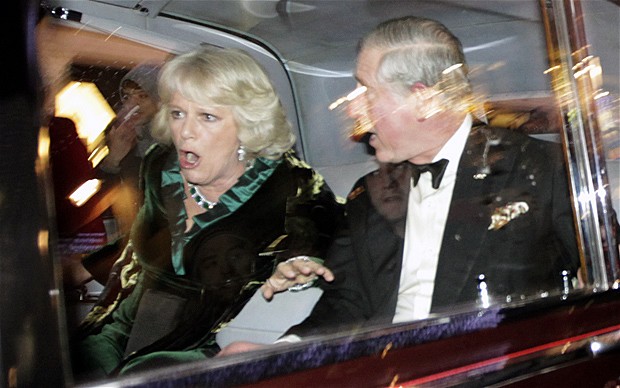
    The protests organised by Britain’s National Union of Students have rather lost their way, with media coverage focussing on the violence rather than the purpose of the demonstrations. At the first, the Conservative Party’s HQ was attacked, and one thug threw a fire extinguisher at police from a high building. At the most recent, the bomb proof windows on the Treasury were smashed, and a car carrying the Prince of Wales and the Duchess of Cornwall was attacked.

    Camilla_1782430b


    Did the NUS anticipate such violence? Possibly. They certainly should have, as they chose the tactic of mass demonstrations and the route that took marchers past Conservative HQ.


    But all sorts of people, including the NUS, like to assert that the small number of trouble makers are not students, but professional agitators. As if being a student and being an agitator are somehow mutually exclusive. When I was a student, most professional agitators were enrolled on some sort of course, though, in those days, students typically paid no fees and even received government grants. Today, agitators who wish to be professional, in the sense of receiving a government stipend for their revolutionary activities, need to sign on for the dole.


    This is where I part company with all sorts of commentators. It is absurd to describe as anarchists anyone who accepts a government dole and demands higher government subsidies for education – or indeed anything else. Anarchist don’t want government controlled education. They don’t want government. That’s what makes them anarchists.


    Like most demonstrators, the NUS wants to give the impression there is mass support for their cause. This is plainly absurd. No demonstration has any role in such a thing. The most popular marches of recent years – against the Iraq War, for example, or in support of the Countryside Alliance – mobilised less than one percent of the UK population.


    Even causes which have mass support, cannot prove such support with a march. A march is the plaintive cry of the powerless, not a demonstration of power. It is a fun day out for totalitarian groups like the British National Party or the Socialist Workers’ Party. It is how causes with minority support demonstrate that they are failing.


    In that sense, a demonstration is hardly ever what it claims to be and almost always attracts the elements that organisers later claim they didn’t want. Far from losing control of their brand to a motivated group of agitators, NUS has deliberately adopted a tactic which can only ever be used to demonstrte how passionate some of its supporters are, and cannot possibly demonstrate the breadth of its support. This being so, they must have anticipated, and counted on, the presence of the violent agitators. They didn’t lose control of their brand. They chose to brand themselves that way.
  • By Quentin Langley


    Let us start by accepting that there are serious negative consequences to the latest batch of Wikileaks.  They are less serious than the previous tranche, which covered actual battlefield tactics in the war against the Taliban, but they are serious nonetheless.  They are highly embarrassing to the US, and even more embarrassing to other governments, including key western allies.  It is even possible that they will put lives at risk, as the State Department claims.  That Julian Assange claims to have redacted everything that would expose Afghan sources to reprisals is, I suppose, to his credit.  But it is unlikely that he succeeded in this aim.  He doesn’t know what information al Qaeda and the Taliban already have, so he cannot know what new information, when combined with this unknown old information, will point them in the direction of patriotic Afghans who oppose the Taliban.  The whole Wikileaks project will therefore certainly lead to death and torture for innocent Afghan and Iraqi patriots.


    But the fact that there are risks, does not make the project as a whole one which is a bad thing, on net. The motor car has killed huge numbers of people, but, overall, the wealth and freedom it has promoted has saved and enhanced more lives than it has cost.

    Click here to continue reading this article.

  • By Quentin Langley

    Let us start by accepting that there are serious negative consequences to the latest batch of Wikileaks. They are less serious than the previous tranche, which covered actual battlefield tactics in the war against the Taliban, but they are serious nonetheless. They are highly embarrassing to the US, and even more embarrassing to other governments, including key western allies. It is even possible that they will put lives at risk, as the State Department claims. That Julian Assange claims to have redacted everything that would expose Afghan sources to reprisals is, I suppose, to his credit. But it is unlikely that he succeeded in this aim. He doesn’t know what information al Qaeda and the Taliban already have, so he cannot know what new information, when combined with this unknown old information, will point them in the direction of patriotic Afghans who oppose the Taliban.

    The whole Wikileaks project will therefore certainly lead to death and torture for innocent Afghan and Iraqi patriots. But the fact that there are risks, does not make the project as a whole one which is a bad thing, on net. The motor car has killed huge numbers of people, but, overall, the wealth and freedom it has promoted has saved and enhanced more lives than it has cost.

    From now on governments, and other organisations, are going to have to accept that secrecy doesn’t work any more. Overall, that is good.

    Right now, we have a biased impression of Wikileaks. Bret Stephens, writing in the Wall Street Journal, accused Julian Assange of waging cyber-warfare against the US. In a sense, that is true. He has done more damage to the US than anything the Taliban or al Qaeda has managed lately, and in the short term he is certainly advancing the cause of Osama bin Laden.

    But there is a reason why much of the information in the Wikileaks seems mundane. There is a reason why much of the information is confidential assessments of foreign governments, which there are good reasons for keeping confidential. And there is a good reason why most of the embarrassment so far has been for governments other than that of the US – such as the awful Gulf monarchies. The US was the easiest target for Wikileaks, but also the government put least at risk by this sort of revelation.

    The US has both had a statute of Freedom of Information and an ingrained culture of transparency for decades. All the stuff where there was no justification for secrecy has already been revealed. That’s how they do it in the US. That is not how they do it in most other countries.

    One day – perhaps soon – Wikileaks will uncover information on a similar scale about the government of China, or that of Iran. Perhaps similar information will emerge about less malevolent governments, like those of India or Nigeria, which will shine the light on deeply ingrained corruption.

    These revelations are such that the US can shrug it off. There will be no impeachment of Barack Obama as a result. But there are many other governments which cannot afford to shrug off similar revelations.

    There are people right now who are very worried about the future survival of their governments, and their own survival as individuals. Those people are not in the White House or on Capitol Hill. They are in Tehran, Beijing, Havana, Harare, Riyadh, Tripoli . . . I could go on, but there is no need. That handful of governments would do for a start.

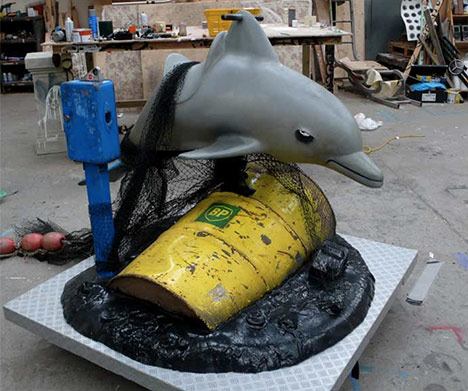
  • That someone should brandjack BP is almost becoming boring, but, typically, avant-garde artist, Banksy has managed to find a rather original way of doing it.

    Taking a perfectly ordinary child's pier end ride and turning it into an environmental statement – while leaving it functional as a child's toy is certainly creative.

    Banksy-kiddie-ride-dolphin-bp-oil-photo

  • By Quentin Langley


    Fascinating development in the ongoing debate about BP.  While brandjacking is mostly about the asymmetric warfare of individuals taking on major brands, the big battalions are still out there, and not just Greenpeace, your competitors still contribute to the debate around your brand.

    Click
    here to see Marketing magazine’s take on this.

  • by Quentin Langley<P>
    Ed Miliband begins his period as Leader of the Opposition in an unusual position.  He is the first Labour Leader in generations to begin his leadership as a blank canvas.  Normally, Labour elects the front runner, and usually the long term leader in waiting.  The last time Labour elected someone other than the early favourite was in 1980, and the eventual winner was the serving Deputy Leader.<P>Of course, the Conservatives usually elect an outsider.  Pretty much every person ever elected Leader of the Conservative Party is someone who would not even have been a candidate twelve months earlier.  But we are now in the era of social media, and a blank canvas is a tempting target for blogs and Twitter.  It is generally acknowledged that in UK politics it is the right-wing blogosphere that has set the standard.  So new leaders of the Conservative Party did not have to cope with a generally hostile blogosphere, and the last Conservative leadership election took place before days of Twitter and Facebook.

    Click here to continue reading this story.

  • by Quentin Langley


    Ed Miliband begins his period as Leader of the Opposition in an unusual position. He is the first Labour Leader in generations to begin his leadership as a blank canvas. Normally, Labour elects the front runner, and usually the long term leader in waiting. The last time Labour elected someone other than the early favourite was in 1980, and the eventual winner was the serving Deputy Leader.


    Of course, the Conservatives usually elect an outsider. Pretty much every person ever elected Leader of the Conservative Party is someone who would not even have been a candidate twelve months earlier. But we are now in the era of social media, and a blank canvas is a tempting target for blogs and Twitter. It is generally acknowledged that in UK politics it is the right-wing blogosphere that has set the standard. So new leaders of the Conservative Party did not have to cope with a generally hostile blogosphere, and the last Conservative leadership election took place before days of Twitter and Facebook.


    So, here we have an interesting confluence. Social media have reached a level of key influence; the right maintains (for the moment) a decisive advantage in this space; and Labour has a new leader with little or no profile. To most of the electorate he is the brother of that guy who chickened out of challenging Gordon Brown.


    Paul Richards is New Labour to his core – even before there was New Labour – and is a genuine expert on public relations and political communications. (His latest book Labour’s Revival is available from Biteback). He believes that social media will have only a limited role in defining to the public who Ed Miliband is. Much of their influence is still filtered through the msm. Social media can generate enthusiasm, and can shape perceptions, especially among the young, but Paul doubts that their role will be decisive.


    He also doesn’t believe that the tag “Red Ed” is going to stick, no matter how beloved it is of some bloggers (including the influential Guido Fawkes) and tabloid headline writers. He compares it with the failed attempt to label Tony Blair as ‘Bambi’, which failed because it simply wasn’t true. In any case, Paul expects Labour to gain a great deal of ground in social media, now that it is in opposition.


    On the last point, his view is partially endorsed by Tim Montgomerie of ConservativeHome. But Tim warns that it is not as simple as thinking that bloggers thrive in opposition. The right wing pre-eminence in social media has been at least partly happenstance: the simple availability of Tim, Paul Staines (Guido Fawkes) and Iain Dale.


    Tim believes the ‘Red Ed’ tag is a limiting factor on Ed Miliband. Social media have been at the forefront of picking up on Miliband’s union ties and his social awkwardness. He concedes that the tag won’t stick if there is no evidence to support it, but believes that it would only take a few pieces of evidence to help define Miliband, perhaps permanently.


    To make this brandjack work, the right will have to be obsessive in putting the label on Miliband, and everything he does. This consistency is required partly because of heightened speed of the news cycle. Stories don’t stay at the top of pile for as long as they used to. In the days of social media, the conversation moves on.


    Paul and Tim both make persuasive arguments, and only time will tell, but social media will play a key role in turning up the stories that run in the msm the following day. How the msm handle things – especially the tabloid headline writers – will also be key in defining the narrative around Ed Miliband. On a very simple level ‘Red Ed’ works as a tabloid headline. This columnist is not convinced that Stephen Byers was any more dishonest than most other members of Tony Blair’s cabinet, but “Liar Byers” worked too, and it cost him his career.
    This is probably what Tim means when he says the label is limiting on Miliband. It was John Prescott who had the reputation for enjoying his foreign trips, and the public forgave him for it. If it had been David Blunkett, the ‘Junkett Blunkett’ headlines would have been too tempting for tabloid editors. Ed is going to have to be very careful not to do or say anything ‘red’.

  • By Quentin Langley

    There's probably something in the psychology of people who come from a small country that is next to a big country.  Certainly, there is no better way to upset a Canadian than to mistake him for an American (and, yes, I know that, by area, Canada is far from small).  It is the same with Kiwis and Ozzies.

    So it must have been great fun for the New Zealand tourist board to brandjack a major campaign by the Australian tourist board: one of New Zealand's best ever April Fool's jokes.

    On the day Australia launched their campaign there's no place like Australia – complete with a noplacelikeaustralia.com website – New Zealand launched noplacelikeaus.com which redirected to the New Zealand Tourist Board website.

    It must have been so galling for Australia, especially after the global success of Tourism Queensland's 'Best job in the world' campaign.

    http://www.stuff.co.nz/technology/3543314/Online-ambushes-hit-Tourism-Australia

  • By Quentin Langley

    I was sent a fascinating link this morning by @egrommet about Nokia upsetting a blogger by making promises they didn't keep.  Fair enough, I suppose, big failure by Nokia and its PR firm.  But, hang on, what was this line in the article?

    This is itself is a good example of the perception that PRs have about bloggers. Pay them in samples, invite them to events, and generally make it seem like you’re doing them a big favour. It's less than cheap and it doesn't help to pay the bills.

    It is true that paying bloggers – or indeed journalists – in samples doesn't help pay their bills.  But who said it is the job of PR companies to help bloggers or journalists to pay their bills?  Sorry, but I have an ethical problem with that.  Obviously, if you want someone to review your product, you have to give or loan them a sample of the product.  You loan them cars, but you have to give them a meal.  It is inherent to the nature of a dinner that you can't ask for it back afterwards.

    Please let me know if I have missed something, but this sounds a lot to me like the tape of Governor Roy Blagojevich complaining that he wasn't being offered enough by the White House for appointing one of Barack Obama's friends to the Senate.  

    Follow the link and let me know what you think?

     http://bit.ly/bJ6O1P


  • By Quentin Langley


    Halloween has always been much bigger in the States than in other countries, but this latest development (as reported in the Telegraph) is pure Americana.


    It is a pretty clear indication that BP still has a long way to go to repair its image. The brandjacking is not over yet. A new CEO was only the first step. According to PR Week the company is also now seeking a new global comms chief. Let’s hope it is someone who ‘gets’ social media.


    Click here to see the full story in the Telegraph.