• By Quentin Langley

    Let us suppose you run a chemical company and you are planning some crisis training. It could be any sector, of course. This is just an example. You prepare. You consider the main points of risk: spill, fire, explosion. 

    You already have plans in place for all of these things. You know what the risks are. Should you have to do a media interview, your spokespeople know more about the health issues – and about chemistry in general – than the journalists. 

    But what if your CEO is accused of sexual harassment? Or your CFO is arrested for paying bribes?

    The actual crisis that arises may be well outside your core business and your core areas of competence. 

    I have long advocated media training for sexual harassment issues. In running scenarios for the chemical sector I always included a twist: perhaps there is a member of staff on the premises threatening to set himself alight unless his estranged wife allows him more access to their children. Obviously, you cannot arrange that. So what do you do?

    But this is now the age of historic claims coming to light. Suddenly, victims are feeling empowered to speak out. 

    Sexual harassment allegations which may have lain dormant for years are coming to the public's attention. Perhaps a settlement was reached and you thought the issue was over. Perhaps it never came to the attention of the organization at all. A member of staff left quietly and senior management didn't even know that she was unhappy. 

    And, of course, it is possible for untrue allegations to be made.

    Whether the underlying issue is something you thought was buried or a complete surprise, these allegations are going to become much more frequent and your organization has to be ready. 


  • By Quentin Langley

    Fake brandjacks are not new. They have existed in social media as long as social media have existed, and conspiracy theories have been around even longer than that.

    A fake brandjack is – as the name suggests – a false story spread about a company, person or organization designed to undermine that entity’s reputation.

    In my book, one example examined is a hit job on McDonalds. It shows a photoshopped sign in a McDonalds window announcing that African American customers will henceforth be charged higher prices.

    Social media memes open themselves to this sort of attack. Anyone can put together a meme. All you need is a picture of someone and a fake quote next to them. Maybe you should mock up a tweet. None of this is hard, and some of these stories can be spread rapidly.

    Snopes.com has a great example of an attack on Melania Trump claiming that she plagiarized Michelle Obama in a statement on Women’s History Month. Two photographs; two nearly identical quotes; two dates for the alleged statements. Neither statement is accurate, and when you put the real statements side by side they are not especially similar, beyond including the phrase “Women’s History Month”.

    What makes some fake brandjacks spread and others not so much?

    A successful fake brandjack needs to have some resonance, at least to some people. That may not mean much beyond the fact that there’s a dedicated group of haters out there who will spread the meme: people who will believe almost anything about the target, or perhaps not believe it, but who will spread it anyway.

    That’s obviously true of McDonalds. A meme suggesting that Whole Foods Market or Starbucks was to introduce racist pricing would not gain traction.

    It is true of almost any political figure, but in this case Melania Trump is particularly vulnerable. Her speech to the 2016 Republican Convention actually did bear some similarities to Michelle Obama’s speech eight years earlier.

    Of course some rumors about political leaders and their families are not true. Allegations about Donald Trump or members of his campaign colluding with Russia have not been fully investigated, but certainly his three predecessors were the victim of insane conspiracy theories. And so were all the presidents before that. Some people claim that the ‘birther’ conspiracy theory against Barack Obama was somehow unique and reflects deep racism in some parts of the US. It was actually nowhere near as vicious as the theory that George W Bush plotted 9/11 or that Bill Clinton had Vince Foster murdered. It wasn’t even the first “birther” theory. The same allegation was made about Chester A Arthur.

    The difference, of course, is that until Bill Clinton became president, the drunken bore at the back of the bar only had access to a few people at once. Now he has Twitter.


  • By Quentin Langley

    In my book I categorize all the 140 brandjacks in my case studies. The biggest categories are the Self Brandjack (corporate actions lead to the problem) the Staff Brandjack (caused by rogue employees) and the Ethics Brandjack (organization is criticized for the ethics of its decisions, eg, supply chain). Some cases come under multiple categories. There are rarer instances, include the Fake Brandjack (when a wholly false story is spread) and the Unanticipated Response Brandjack.

    Does the Tide Pod Challenge fit into the last category? Not quite. It may be something new.

    For those of you not familiar, the Tide Pod Challenge is a craze among teenagers of eating the brightly colored laundry pods sold by Procter and Gamble.

    If P&G was being criticized for the bright colors – potentially making the pods attractive to toddlers – that would be an Ethics Brandjack. While that issue has arisen, it is unrelated to the YouTube meme of teenagers consuming them. The teenagers know exactly what they are.

    But there's no easy fit with "Unanticipated Response" either. That covers instances where the organization invites a response and gets something surprising. For example, GM invited YouTube users to create their own ads for the Chevy Tahoe. Some were not at all flattering.

    But P&G was not seeking any sort of response here. They were just selling laundry pods. While teenagers being irresponsible is hardly unanticipated, no-one could reasonably have guessed the precise vehicle of their stupidity.

    Just as in a Fake Brandjack, P&G is a victim here. The brandjack doesn't stem from malfeasance or even bad judgement. It was just bad luck.

    So what should we call this one?

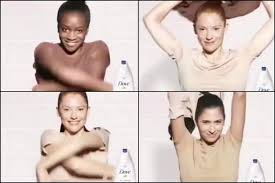
  • Unilever's Dove brand is in trouble, again, for insensitive advertising. This time it is harder to see the image choices as being an unfortunate accident.

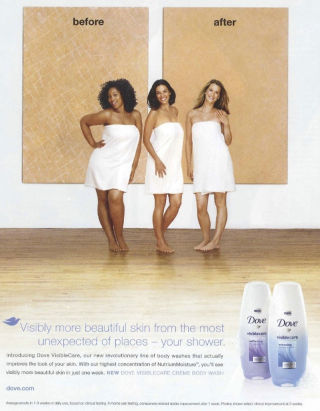
    Let's start with the 2011 ad. That showed large swatches to demonstrate how people could improve their skin. The three models standing in front of it were progressively more light skinned moving from left to right – from the unwashed to the washed skin. The placement sequence may not have been conscious.

    Dave racist ad

    But the 2017 ad plainly shows people changing ethnicity by removing items of clothing. That would be, well, odd, for a clothing brand, but Dove is a soap brand, and there's therefore an implication of associating darker skin with being unclean.

    . Dove ad 2017


  • By Quentin Langley

    If you participate in a controversial political demonstration that is beset by violence – even if you didn't personally carry out any violence – you can reasonably expect that this will have an impact on your reputation. People may choose not to be your friend or your customer. Your employer might fire you. This is not, generally, an infringement of your right to freedom of speech. You have a right to hold any view you like, but you don't have a right to friends or a job.

    There are exceptions. A government organization cannot usually, in a liberal democracy, have a categorical ban on employing people based on their political views. In the US that would fall foul of the First Amendment. But a private actor can associate with anyone it chooses. 

    None of this is new to the digital age. What is new is the speed and ease with which your image can be circulated and identified. Photographs of people at the so-called "alt-right" demonstration in Virginia are being circulated online with messages calling on people to "out" them to their employers. More than one person has been fired already. There's at least one allegation of a false positive – someone being mistakenly identified as having participated in the rally. Whether or not that proves to be the case in this instance, there's certainly a risk of that. There's also, presumably, a risk of people being maliciously brandjacked by someone falsely claiming they were at the rally.

    Obviously, employers should proceed with caution and check the facts. 

    This is really at the soft end of the privacy issue. People have no reasonable expectation of privacy while participating in a public demonstration. That's just basic common sense.

    But modern technology is blurring the distinction between the public and the private space. Partly this is just because people choose to share information about themselves in public and are sometimes surprised by the consequences. But there are other issues too. Information about you can be hacked from private sources and released. We are accustomed to the idea that a modest fence shields us from public view, but that's only true in two dimensions. If you are sunbathing naked behind a fence you were always at risk of being seen from a hot air balloon. That's a pretty small risk. But if digitally controlled drones become common place the risk begins to rise.

    We are going to have to have a major public debate about this subject. The parameters of that debate are shifting very rapidly. 

  • By Quentin Langley

    According to some research by Good, Burham and MacDonald of the mammalian mascots of clubs in the ten richest sporting leagues in the world 30% are endangered and 33% are critically endangered. 

    What a fascinating finding that opens some rather obvious solutions. Yes, of course, clubs could donate a dollar from every piece of branded merchandise they sell to conservation causes. Of itself that would be a considerable financial boost for the endangered species. And, yes, it could earn some favorable coverage for the clubs.

    But a good Corporate Social Responsibility (CSR) program is much more than this. 

    A good CSR program involves mobilizing your publics to the cause. In this case, the most relevant publics are fans and athletes. The clubs have millions of devoted fans – in the case of the top clubs, hundreds of millions. Fans are extremely loyal to their brand. To associate some of this loyalty with a good cause would benefit both the club and the cause. 

    As leading CSR expert, Pamela Mounter puts it, "to have credibility, a CSR campaign should be recognised as being part of an organisation's DNA, which means engaging and involving employees". How much more is this the case when the employees are globally famous brands in their own right?

    Sports clubs have very high profile athletes who can speak out for the cause of preserving the endangered species. Again, the benefits run both ways. Top athletes earn most of their money from sponsorship and branding deals. Becoming associated with a good cause enhances their value to commercial brands, as well, of course, as benefiting the cause.

    Good, Burham and MacDonald have conducted one of the most brilliant pieces of branding research in years. It is brilliant in its insight and potential rather than its complexity, I doubt it took them long and could have been conducted entirely on Wikipedia. They are zoologists rather than branding experts, but it is now up to those of us in branding and reputation management to pick up the baton and publicize their research for the potential it has to change the world. 


  • By Quentin Langley

    United Airlines has featured heavily in this blog, in my teaching and training and in the book Brandjack. The United Breaks Guitars brandjack was a classic. Dave Carroll was not a household name, but managed to produce a highly amusing viral video which hit the airline hard.

    Your editor has been sceptical about claims that this was the direct cause of a $180 million decline in United's share price in a period of four days. The share price did decline, but airline stocks are notoriously the volatile, and other airline share prices fell at the same time. But if only ten percent of that decline was attributable to the video then it is still far more than the value of the guitar. 

    On the day the video came out a Vice President of United phoned Dave and asked him if they could use the video in staff training. That certainly sounds like a learning strategy. But, as everyone now knows. United has not been learning.

    This video has been widely viewed, but is worth sharing again.


    The cost to the airline in terms of its reputation, whether measured in the immediate share price or the expected future earnings, is sure to be considerable. It would have been simpler and far cheaper to have engaged in a Dutch auction. United apparently offered up to $1000 for customers to agree to be bumped, but even 50 times that would have been cheaper than the damage this video has inflicted on the company. It would have been simple to have kept raising the offer until someone accepted.

    But United must have known that forcibly evicting the customer would have been filmed. The odds of someone having a camera there were 100%. It has exposed the company both to harsh (and justified) criticism and to mockery. 

    As Jason Steele put it on Twitter:

    Don't worry about the bad press, @united! I mean, what company HASN'T beaten a customer unconscious for wanting the service they paid for?

    Despite the experience with Dave Carroll, United apparently hasn't learned anything. Learning is not just something that happens in a corporation, it is a decision. Learning needs to be embedded.

    Get to it, guys. 


  • By Quentin Langley

    The UN has decided to end its controversial partnership with Wonder Woman in which she was an honorary ambassador promoting the UN's sustainable development goal of gender equality and the empowerment of women and girls by 2030. Wonder Woman was actually the senior partner in this relationship. She has been defending the Earth for more than a century, and her exploits have been chronicled by DC comics for 75 years, whereas the UN is a mere 71 years old. 

    There seem to be two different and contradictory reasons for sacking Wonder Woman: she was always a controversial choice with two groups of people. UN staff have complained that Wonder Woman is "not culturally encompassing or sensitive" and is inappropriate "when the headline news in United States and the world is the objectification of women and girls."

    These are very different issues. The suggestion is that Wonder Woman is "culturally insensitive" in developing countries where women are not free to dress as scantily as an Amazon princess and that she is an inappropriate role model in Western countries where women and girls may feel pressured to dress in scanty attire. 

    The more pressing of these issues is very much the laws which require women to cover up. This is prevalent in countries which oppress women in all sorts of other ways, such as genital mutilation and denial of schooling. (Most of these countries oppress men, too, though in slightly lesser degree). Providing a role model who is powerful and dresses as she pleases is positive. 

    In the West, too, women should be able to dress as they please. If a man attacks a scantily clad woman, he is the criminal and she is victim or, in Wonder Woman's case, the person who beats him up and delivers him to the police station. Women should not be pressured into wearing clothing they find inappropriate, but, even more importantly, they should be free to make their own choices and not feel that their choices "provoke" men into attacking them. 

  • By Quentin Langley

    "€100k in used notes might make poppies less political, say FIFA" according to the satirical news site, Newsthump. Even FIFA is not usually this blatant, but it demonstrates the moral standing of FIFA that this barely qualifies as satire. 

    The row has arisen before. FIFA has a longstanding policy of banning "political" statements on football strips at its games. The national teams of England and Scotland are to play a World Cup qualifying match on November 11th – Armistice Day in Europe, known as Veterans' Day in the US. In the UK and other Commonwealth countries, the poppy is the symbol of the annual Armistice Day appeal. Newsreaders and politicians generally wear poppies in the weeks before Armistice Day, and would face public criticism if they chose not to do so. 

    While "political" symbols are banned, national symbols are not. Indeed, the whole point of the football strip in an international match is to distinguish players of one nation from players of another. The English lion and the Scottish thistle are part of the strip. 

    Armistice Day is not a national holiday in Britain, but it is in most of Europe and in the US. If other countries make this commemoration a national holiday, surely it can be accepted as national branding in the UK as well. But FIFA is not likely to accept this, absent the "donation" in used notes. 

  • By Quentin Langley

    Recalls are never good news. You recall products because they are in some way defective. In the case of the Samsung Note 7 the product is also unsafe. The company is advising people to back up data and stop using the device, turning it off permanently. That's not good.

    But with any recall, how you handle it is critical. In 2006 Dell handled the recall of some batteries which were inclined to go up in flames – a product safety issue rather similar to that faced by Samsung – in an exemplary way. Four years after the event, the top four matches on Google for "Dell battery recall" were all information from the company about how to return your batteries. Even ten years on, the second match is still information on the recall from the company.

    Right now, Samsung has the first Google match after news reports, which is not bad performance. The current information about the recall is simply telling people to back up and close down their products with promise that information about a replacement product will follow.

    In the early stages of this crisis it is hard to tell if they are going to match Dell's performance at what was the largest product recall up to that date, but let's see. 

    One other thing to note. Dell was not the manufacturer of the batteries: Sony was. But they were sold as part of a Dell badged product, so Dell, quite properly, did not seek to pass the buck but owned up to its responsibilities. Samsung, so far at least, has done the same.