• By Quentin Langley

    There have been many scandals in business, politics and pretty much every field of life. This one at VW is breathtaking in its scope.

    The deception seems not to be a matter of opinion. This is not Shell taking optimistic estimates of oil reserves and treating them as something proven. 

    It is not a junior employee putting a thumb on the scales. Software was built into VW's diesel models. The device that cut emissions during tests doesn't seem to have been created solely for that purpose, but the software that detected the tests and shifted the engine to clean mode does seem to have been created simply to rig the tests.

    This is worse than rigging the tests at the factory since this deception necessarily required considerable prior planning. It couldn't have been a spur of the moment decision to hide a temporary problem. 

    Presumably the cars are not designed to run on this clean mode all of the time. It retains emissions – since this is diesel, I would guess particulates – during the test in order to expel them later. But if you can design a system with this level of sophistication why is it so hard to design something which retains the particulates permanently and is constantly engaged? I am sure there is an engineering answer to that. Perhaps it would have fuel efficiency or performance. But there is no answer which addresses the serious ethical breaches on display here.

    This is both a public affiars and a marketing issue. VW has set out – presumably at a strategic level – to deceive both regulators and consumers. 

    It will take a very long time to earn back that trust. 
  • By Quentin Langley

    Yesterday, the New York Stock Exchange was down for four hours due to "technical difficulties". There's been no further explanation, and initial reports did not even include that. Conspiracy theorists have been speculating, of course, with some talk of cyber attacks, though it is known that NYSE has also been disconnecting some legacy systems, so a botched systems upgrade seems possible. NYSE is talking about a "configuration issue". The fact that the Wall Street Journal homepage was down for about an hour during the NYSE outage fuelled the conspiracy charges.

    When you face a crisis, full disclosure is not just the ethically right thing, it is the sensible thing. Get ahead of the story. Tell your own story, don't wait for others to tell it for you. Tell the truth. Tell it all. Tell it now. 

    That NYSE is still vague on the details almost 24 hours later is bad policy and will undermine future trust.

    It is true, of course, that in a crisis it can take time to get to the bottom of things. It is perfectly possible that NYSE is still investigating the causes. But unless you want to look like Tony Haywood and his "I don't knows", there is a time-honoured approach to this, and it isn't silence. The right course is to make it clear you are investigating and will publish your findings when you have them.

    It isn't hard, NYSE. Just get ahead of the story by being transparent. You are a market. Transparency is your product. Time you started using it. 

  • By Quentin Langley

    Let us suppose that you have two careers. Let us suppose that you are, on the one hand, a successful entrepreneur, with considerable property investments, including resorts, and numerous other interests.

    Let us suppose you are also a celebrity jackass, who mouths off on any subject that comes to mind while pretending to run for president. 

    There comes a point when your business partners – even in the entertainment side of your business, who welcome a high profile – might find it advisable to severe their ties with you. NBC, and many leading figures in the entertainment industry have hit out at Donald Trump over his rambling, incoherent, attacks on Mexicans. 

    Apparently Trump believes that immigrants – or possibly just illegal immigrants – are rapists, though he qualifies this by conceding that some are probably good people. It is not clear whether he means that some rapists are good people or that some immigrants might not be rapists. 

    "They don't send us their best" he rants, as though the Mexican government is dispatching people to the US in lieu of sending them to prison. 

    Trump is not seriously running for president, any more than he was four years ago. He pursued this ambition with rather more seriousness when he sought the Reform Party's nomination in 2000, and won the California primary, but now he is apparently a Republican, and does not, even in his own insane imagination, believe he has a prospect of winning. 

    His political views are an incoherent mixture of populist drivel. On the economy he is completely out of line with the Republican Party, and much closer to Nancy Pelosi and Bernie Sanders on trade. 

    But the purpose is neither to advance a political agenda or seek election to office. His purpose is to generate publicity. This probably helps some aspects of his business, but by crossing the line from controversialist to mad racist uncle in the attic, he has found his brands – such as the Miss USA pageant – getting dropped by real businesses. 

    Trump has real achievements to his credit in both careers. He has been a successful businessman, and a very successful celebrity jackass. But the time has come to focus on one career. It is as a jackass that he is genuinely world class, so that should probably be his choice.

  • By Quentin Langley

    Henry Ford is famously supposed to have said "half my advertising budget is wasted, and I will give a million dollars to the man who can tell me which half". He may have underestimated the proportion that is wasted, and the value of knowing which slice of the budget is, even in the dollars of 80 years ago. 

    But does the advance of digital platforms destroy advertising in its traditional sense altogether? 

    Michael Wolff wrote in Television is the New Television:

    Digital advertising works less well even beyond its own clumsy presentation because all advertising works less well, and, alas, digital allows a finer measurement of this ever-falling response rate.

    People can skip ads on TiVo. They can block pop-ups. They can simply do other things. But advertising is also getting more intelligent. Google and Facebook algorithms can target ads directly at individual consumers.

    One can argue that such targeted communication is no longer advertising, in the traditional sense. If it is not mass communication, then perhaps it is direct marketing. If it is about building conversation and relationships, perhaps it is public relations. Certainly the days when an ad booked in a prime time show can reach over a hundred of million in the US or tens of millions in the UK are gone. When companies make ads for the Superbowl, the earned media coverage often dwarfs the paid for. 

    And yet, I saw something astonishing last night, that I had never seen before, and all with no media coverage that I had seen. Facebook ran a TV ad. It seems the campaign was actually announced in February, and it wholly passed me by. That, in itself, says something about the impact of TV ads.

    The death of advertising is much discussed in business schools. It remains a controversial thesis. But that advertising is changing in ways that will make it unrecognisable seems beyond doubt.


  • Download

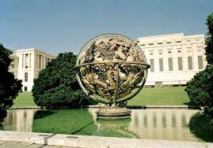
    The United Nations needs a rebrand apparently. The 70 year old international institution, from its headquarters in Geneva, Switzerland (pictured above), has announced a campaign to work on changing public perceptions of the work that its programs do in the world. 

    Oh the opportunities presented! What public relations person with a passion for branding wouldn't want to at least try to come up with ways to make the U.N. more palatable to the current world? There are hundreds of programs managed by the UN. There are non-governmental organizations whose work is tied to the UN. Every one of these bodies needs to have its brand made over, and all of them need to be tied to the UN in general. 

    The campaign is in its infancy, and I am sure there are dozens of agencies, consultants and freelancers all trying to find a way to do some of the work needed. Even the college I currently attend has its masters candidate students in the media department doing work on this. 

    What will ultimately be achieved by this rebrand should be something that the international communities can embrace and that the publics of the world can better related to. It will take some time to see the full change, but all of us in the media will be watching. 


  • Corinthian Colleges are closing their doors come next Monday. After years of federal investigations into its loan practices, the college is forced to admit that it bilked thousands of hopeful students, the government and various other institutions in order to line the pockets of the organization's owners. 

    With the pressure on today's young people to get some kind of higher degree in order to succeed in the workplace, Corinthian branded itself as an organization that could help students get these degrees and certifications, and would make sure they could afford the classes by helping them take out loans that most should never have been approved for. These students are now tens of thousands of dollars in debt, and with no way to pay the loans back. Promised jobs never materialized even as debts piled up. 

    Corinthian is just one of many for profit colleges out there, and they are all branding themselves as part of the future, able to help young adults get ahead in today's world of technology. What happens when a brand lies to its customers? Hopefully, the brand gets its rugs pulled out from under it and people go to jail. 

    With the collapse of a for profit collegiate brand because of financial mismanagement, others of the same ilk will be scrutinized as well. And their students should be scrutinizing on their own. Remember, a college's brand will be looked at when you go to get a job. 

  • By Quentin Langley

    Britt McHenry was facing a stressful time. She was retrieving her car from a tow lot. But there is simply no way to spin this story that presents her behaviour as anything other than disgusting. Even if we assume that her car was towed unjustly and that the fees being charged were outrageous, her offensive tirade belittling the lady collecting the fee was despicable. The clerk was, I think we can safely assume, not the person responsible either for towing McHenry’s car or setting the release fee. Just to be clear, we have no reason to assume that anyone at the company behaved anything other than reasonably towards Ms McHenry. It is very clear that her behaviour was far from reasonable.

    As is now, of course, completely usual, the dark side of McHenry’s personality was revealed when a YoutTube video went viral.


  • By Quentin Langley

    In criminal cases even the most egregious offenders are entitled to legal representation. No such rule covers civil cases, but, nonetheless, even the most unpopular causes can generally find lawyers. The case against gay marriage in the US Supreme Court certainly has lawyers, but the New York Times is reporting that top firms will not represent this case. 

    Why should this be the case? Gay marriage is still a divisive issue in the US with substantial numbers opposing it. That's certainly a minority position, but it is no less popular than support for gay marriage was just a few years ago. When support for gay marriage was a minority position – not only nationwide, but in liberal states such as California and Washington – there was no difficulty hiring top lawyers to represent it. For example, Ted Olson, widely considered one of the finest Supreme Court lawyers, and Solicitor General in George W Bush's first administration, was lead attorney. 

    Representing unpopular causes can certainly cost a law firm clients, but why is this cause in particular so difficult? Across the US (though varying greatly from state to state) public opinion favours gay marriage about 60:40. As recently as 2009 it was the other way round, and President Barack Obama is among those who has changed his mind since then. A few years earlier even liberal states were voting decisively against the proposition yet lawyers were keen to take the case.

    The answer probably lies in the age profile of support for gay marriage. Some 78% of 18-29 year-olds support gay marriage and only 33% of those 65 and older. That might seem to suggest that law firms would be more wary of the case for gay marriage. Younger people are much less likely to bring large corporate clients to a firm. But against that are two more powerful factors. The trend is clearly in favour of support. Lawyers may not want to represent a position that is unpopular now and is likely to be even more unpopular in a few years time. But perhaps, most fundamentally, law firms need to recruit top graduates. 

    Marketing advisers and academics sometimes focus a little too much on customers as a driving force of business decisions. But there are other publics on which an organisation depends to survive: investors, politicians and regulators, and staff. A law firm that can't recruit the best graduates from the top law schools will face critical problems a few years down the line.

    When Shell faced the twin crises of Brent Spar and Nigeria in the 90s it was feedback from graduate recruitment fairs that prompted the group leadership to act. Disney has long granted partnership benefits to gay employees not because its customer base – families with young children – includes large numbers of gay people but because it recruits singers and dancers from Broadway and Hollywood. 

    Being able to recruit top talent is critical to the future of an organisation. Organisations recognise this, but sometimes media coverage and academic study overlook it.